What Is a Cocktail Dress? Your Style Guide
Got an invitation that says "cocktail attire" and you're not quite sure what that means? A cocktail dress is a women's semi-formal dress that sits between smart casual and black tie on the formality scale, typically falling from knee to ankle length. It's one of the most versatile dress codes out there, and once you understand the rules, it's genuinely fun to dress for.
What Is a Cocktail Dress? Definition and Dress Code Explained
A cocktail dress is a semi-formal women's dress worn to evening events, parties, weddings, and professional gatherings. The dress code name itself goes back to the cocktail party, a social occasion that emerged in mid-twentieth century American society. Today it applies far more broadly.
On the formality spectrum, cocktail attire sits above business professional and below black tie. Think: a dinner party at a private members' club, a daytime wedding reception, or a corporate awards evening. You're dressed to impress, but you're not in a floor-sweeping gown.
What makes the cocktail dress distinctive is its balance. It's polished enough to signal occasion but relaxed enough to allow personality. The silhouette can be structured or fluid, the colour bold or classic, and the fabric rich without being theatrical.
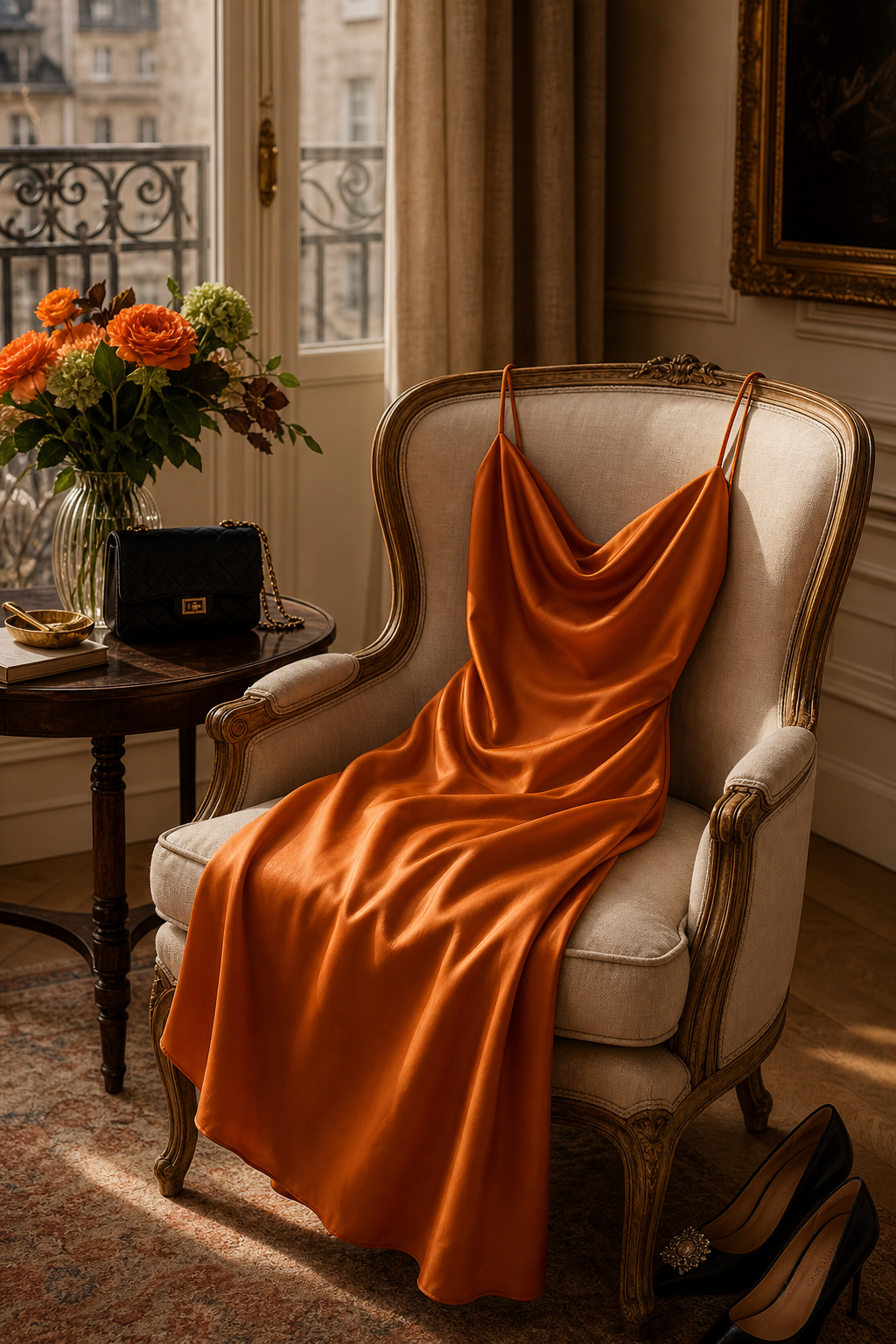
There are a few boundaries that still hold. Floor-length gowns are generally too formal for a cocktail occasion (that's black-tie territory). Mini dresses can work for informal social events but tend to read too casual for professional or wedding settings. When an invitation doesn't specify a dress code, cocktail is generally the safest default: you'll be dressed up enough to make an impression without crossing into overdressed.
One colour rule worth knowing: avoid white or ivory unless the invitation explicitly invites it. That applies at weddings especially, but also at many formal corporate events where wearing white can read as either bridal or simply unaware of the room.
A Brief History: How the Cocktail Dress Evolved
The cocktail dress has roots in 1920s America, when Prohibition-era socialites began hosting pre-dinner drinks parties. These gatherings needed their own dress code: more glamorous than daywear, but looser and more social than the formal dinner dress that followed later in the evening.
By the 1930s, the cocktail hour had become a fixture of social life, and the dress evolved with it. It was shorter than a dinner gown, easier to move in, and allowed women more personal expression through cut and fabric. Designer evening wear in this period began to separate into distinct categories, with the cocktail dress occupying a newly defined space between daywear and formal gowns.
The postwar decades gave the cocktail dress its iconic moment. The silhouettes of the late 1940s — nipped waists and full skirts — translated beautifully into cocktail shapes. Through the 1950s and 1960s, the sheath dress, A-line cut, and shift all became standard cocktail shapes, worn by women across social classes as formal entertaining became more accessible.
The definition has since loosened considerably. The garment evolved from a strictly defined social occasion garment into a broad category covering any smart, occasion-worthy women's dress worn between midday and midnight. Today it encompasses midi lengths, backless styles, liquid satins, and sculptural ruffles that would have raised eyebrows in a 1950s parlour.
That evolution matters practically. The old assumption that cocktail dresses should be matte, knee-length, and conservative no longer reflects how the dress code is actually interpreted. The rules have expanded, and so has the opportunity to wear something genuinely striking.
Length, Silhouette, and Neckline: Getting the Fit Right
The most common question is length. Traditionally, cocktail dresses fell just above or just below the knee. That range still works, but the midi length, from the knee to the ankle, has become the most popular choice across styling guides and occasion-wear collections. It reads as polished and modern, flatters a wide range of body types, and works across venue types from rooftop terraces to formal dining rooms.
Mini dresses (above mid-thigh) are an option for more relaxed social events. But they're genuinely the wrong call for a professional event, a wedding, or any occasion with a conservative host. If in doubt, aim for knee-length or longer.
Silhouette
A-line cuts are the most forgiving silhouette across body shapes. They create a clean line from the waist and move well. Fitted column dresses work beautifully for formal cocktail events where you'll be sitting and standing rather than dancing. Pleated midi skirts with structured bodices have gained ground as an alternative to purely simplified shapes.
More directional choices include backless designs and illusion panels, which add visual interest without sacrificing formality. Sculptural ruffles, once considered too editorial for a dress code event, now appear regularly in occasion-wear. The key is proportion: one statement element is enough. A backless dress doesn't need a dramatic ruffle as well.
Neckline
Halter necklines feel current and clean. They work especially well for warm-weather events and carry a shoulder-baring elegance without going strapless. For winter or more conservative settings, a dress with structured sleeves can signal the same level of occasion while covering more.
Strapless and off-the-shoulder styles remain reliable cocktail choices, but they work harder at formal events than at outdoor garden parties, where a breeze or uneven ground can make them impractical. Think about the physical context of the event, not just the aesthetic.
Fabrics, Colours, and Seasonal Choices
Fabric is where a cocktail dress earns its formality. Rich, refined materials do the work of signalling occasion more effectively than any other single choice. In practice, this means leaning away from jersey, cotton day-dress fabrics, or anything with visible stretch, and towards satin, velvet, chiffon, or crepe.
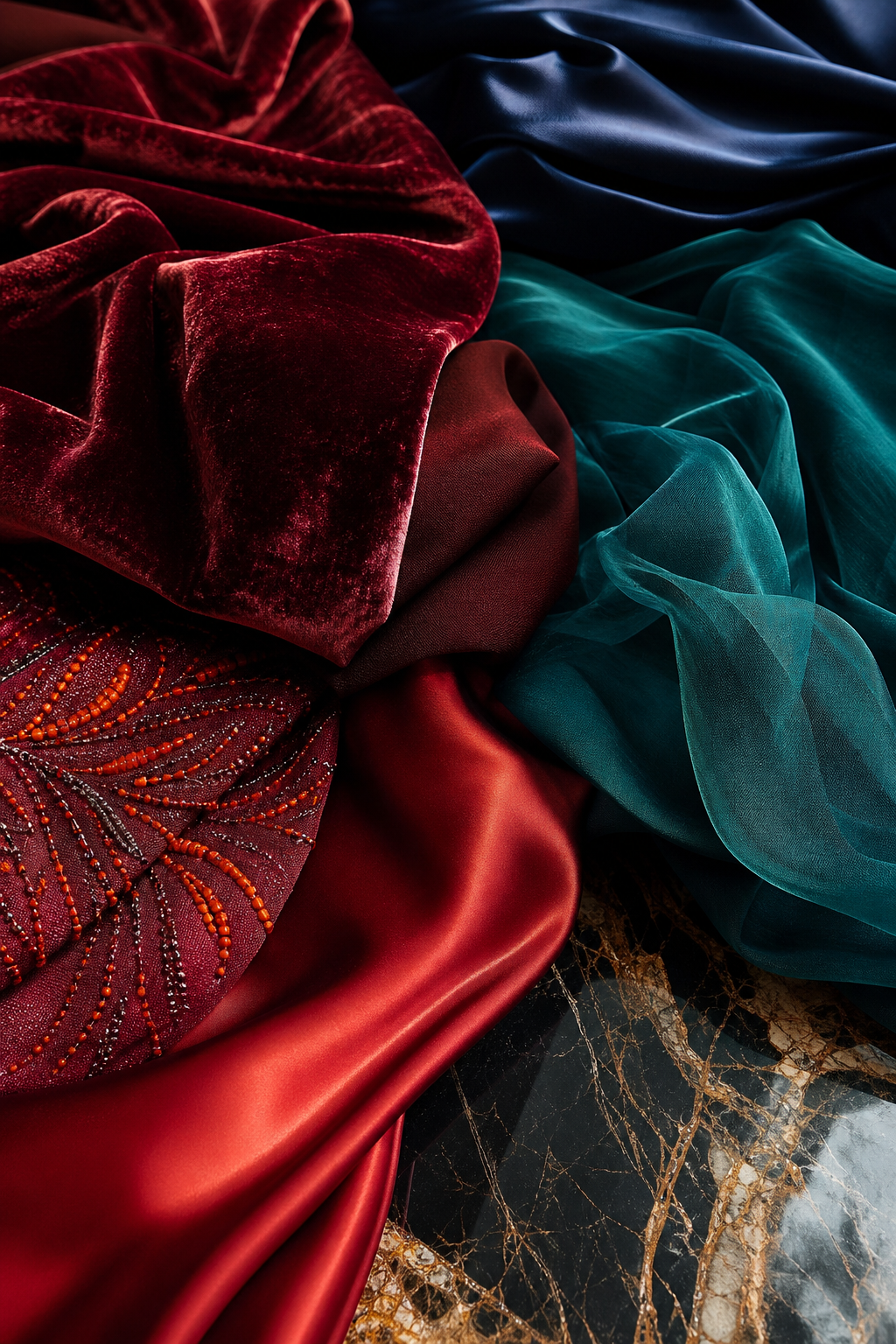
Chiffon is popular for warmer months. It's lightweight and moves beautifully, which photographs well and feels comfortable over a long evening. Satin adds structure and polish, particularly suited to cooler months or formal cocktail settings where a sharper silhouette reads well under interior lighting. Velvet is best reserved for autumn and winter events: it carries weight and depth that looks deliberate in November but can feel heavy by July.
One shift worth noting: liquid satin and high-sheen fabrics are increasingly common choices for cocktail events. The old assumption that cocktail dresses should avoid shine has softened. Metallic finishes and deep jewel tones such as midnight blue, bottle green, or garnet work well for festive events. The distinction that still holds is between a considered high-sheen fabric and cheap-looking synthetic shimmer: the former reads as intentional luxury, the latter doesn't.
On colour, black remains the easiest default and with good reason: it photographs well, travels without stress, and suits most venues. But the colour palette is genuinely open. Rich jewel tones work across seasons. Soft pastels and blush tones suit daytime and summer events. The one consistent advice across styling guides is to avoid overly bright or neon colours unless the event specifically encourages bold attire. Neon at a formal wedding reception reads as oblivious to the room rather than fashion-forward.
Shoppers who want access to exceptional fabrics and silhouettes without the full retail price often find pre-owned designer pieces the most usable route. At CSD's pre-loved designer dress collection, every piece is authenticated in-house using Entrupy and Real Authentication, so you can confidently wear a satin Dior or velvet Prada midi to a black-tie adjacent event knowing the quality is genuine.
Beyond the Dress: Modern Alternatives for Cocktail Events
The cocktail dress code doesn't actually require a dress. That's one of the few genuinely liberating things about it. The dress code describes a level of formality and occasion, not a specific garment category. So long as the overall look reads as polished, dressed up, and appropriate for the event, the format is flexible.
Jumpsuits
A well-cut jumpsuit in a formal fabric, think silk, crepe, or structured satin, reads as every bit as occasion-ready as a dress. Halter-neck and wide-leg silhouettes tend to carry the most formal weight. Avoid anything with cargo pockets, drawstring hems, or visible casual hardware.
Trousers and a Blouse or Blazer
Tailored trousers with a silk blouse and a structured blazer or jacket can absolutely meet cocktail dress code. This combination works particularly well for professional events, daytime weddings, or occasions where you'll be on your feet for long stretches. The fabric choice matters: the trousers should be in a formal material, not a business-casual chino weight.
Separates: Skirt and Top
A midi skirt in velvet or satin paired with a fitted top or camisole can be a genuinely elegant cocktail look. Pre-owned designer midi and maxi skirts often appear in occasion-weight fabrics that make this combination work well. The key is that both pieces should feel deliberate together rather than assembled from existing daywear.
What doesn't work: denim in any form, casual knitwear, trainers, oversized silhouettes that read as loungewear, or any combination that relies on accessories to "dress up" an otherwise casual outfit. The foundation of the look needs to carry the formality first.
How to Style a Cocktail Dress: Accessories, Footwear, and Day-to-Night Dressing
Footwear is the most consequential styling decision after the dress itself. The general rule is that strappy stilettos suit indoor formal venues, while block heels are more usable for outdoor or garden settings where a narrow heel will sink into grass or get caught in cobbles. Both read as appropriately formal for cocktail occasions.
Flat shoes are possible, but they need to be deliberately elegant: a pointed-toe flat in leather or satin, not a ballet flat in casual fabric. Sandals are appropriate, particularly open-toe styles for warmer events, something the more formal white-tie dress code actually prohibits.
Matching jewellery metals to shoe hardware is a small detail with a disproportionate effect. Gold hardware on shoes pairs better with warm-toned jewellery; silver and platinum hardware reads better with cooler pieces. It's not a hard rule, but it produces more considered results.
Bags
For a cocktail event, a clutch or small structured bag works far better than a large tote or everyday shoulder bag. The size matters because cocktail parties involve a lot of standing, meeting, and greeting. A clutch in the left hand keeps your right hand free. A rigid-frame minaudière or a leather envelope clutch both fit the occasion. Avoid canvas or anything casual in weight or finish.
Day to Night
If you're transitioning from a daytime event to an evening cocktail occasion in the same dress, a few adjustments change the register of the look considerably. Remove or swap out a cardigan or blazer layer used for daytime warmth. Swap flat shoes for heels. Add bolder jewellery in place of any delicate daytime pieces. A red lip or more polished hair takes a work-appropriate midi into clearly evening territory.
For chilly venues or more conservative settings, a bolero jacket, a shawl, or a tailored long coat worn over a cocktail dress adds coverage without reducing formality. These work particularly well over strapless or backless styles at events where the dress itself would otherwise feel too revealing for the context.
Sustainability-minded shoppers have found that pre-owned designer pieces are the most usable way to access the rich fabrics and careful construction that styling guides consistently recommend. CSD (Consigned Sealed Delivered) is a London-based luxury consignment retailer with a boutique on Marylebone Lane and worldwide shipping, stocking authenticated pre-owned pieces from houses including Chanel, Dior, Prada, and Gucci. If you're building a capsule of occasion-wear that will carry you through multiple events, the quality and provenance of pre-owned designer is genuinely hard to match at the same price point. If dressing for an event with a stricter formality level, our guide to evening wear and dress codes covers how to calibrate the look for black-tie-adjacent occasions.
Frequently Asked Questions
What length should a cocktail dress be?
A cocktail dress traditionally falls between the knee and the ankle. Knee-length and midi lengths are both appropriate and widely accepted. Mini dresses (above mid-thigh) can work at informal social events but are generally too casual for professional settings or formal weddings. Floor-length gowns cross into black-tie territory and are usually too formal for a cocktail occasion unless the event is explicitly improved.
Can I wear a jumpsuit to a cocktail event?
Yes. A well-cut jumpsuit in a formal fabric such as silk, satin, or structured crepe meets cocktail dress code standards. The silhouette should be tailored and polished rather than relaxed or casual. Halter-neck or wide-leg styles with clean lines work particularly well. The same logic applies to elegant trousers with a silk blouse and structured blazer.
What colours are appropriate for a cocktail dress?
Black remains the safest and most versatile choice. Beyond that, deep jewel tones like midnight blue, forest green, and burgundy work across seasons. Soft pastels suit daytime and warmer events. Avoid white or ivory at weddings out of respect for the bride, and steer clear of neon or very bright colours unless the event explicitly encourages bold attire.
What shoes work best with a cocktail dress?
Strappy stilettos are the classic choice for indoor formal events. Block heels are better for outdoor venues where narrow heels are impractical. Open-toe sandals are acceptable for warmer events. The key is to avoid casual footwear: trainers, flat sandals, or anything that reads as daywear will undercut an otherwise polished look regardless of the dress itself.
Is a cocktail dress the same as a semi-formal dress?
In practice, yes: the terms are often used interchangeably. Cocktail attire sits in the same formality zone as semi-formal, above business casual and below black tie. Some style guides treat them as subtly different, with semi-formal allowing slightly more casual interpretations, but for most events the two dress codes call for the same type of polished, occasion-worthy dress or outfit.
Can I wear pre-owned designer to a cocktail event?
Absolutely. Pre-owned designer pieces often carry the rich fabrics and careful construction that cocktail dressing actually requires: satin, velvet, structured crepe. Buying authenticated pre-owned from a specialist retailer like CSD (Consigned Sealed Delivered) gives you access to pieces from houses like Chanel, Dior, and Prada at significantly better prices, with the same genuine quality you'd expect from a boutique purchase.
Conclusion
A cocktail dress is ultimately about getting the formality level right: rich fabric, a considered silhouette between knee and ankle, and accessories that match the occasion. The definition has loosened enough to accommodate jumpsuits, separates, and high-sheen satins that older guides would have dismissed. Start with the fabric and length, then let the rest follow. If you're looking for a pre-owned designer piece that meets the brief for your next occasion, browse the CSD collection of occasion dresses, authenticated in-house and available for worldwide shipping from our Marylebone Lane boutique.