How to Store Handbags: A Step-by-Step Guide
Want your designer bags to look runway‑ready years from now? Follow this five‑step routine and you’ll keep colour, shape and hardware in top shape. No pricey climate rooms needed , just a few smart habits.
Step 1: Clean the bag – interior and exterior
Start with a gentle wipe‑down. Use a clean, soft cloth dampened with lukewarm water for leather, and a suitable leather cleaner for stubborn stains. For canvas or fabric bags, a mild soap solution works fine. Avoid harsh chemicals; they can strip oils and fade dye.
Turn the bag inside out and gently brush the interior with a soft, clean brush. This pulls out dust, grit and any forgotten receipts that could scar the lining. A quick check for stains on the interior lets you treat them before they set.
Once dry, give the hardware a quick polish with a clean, lint‑free cloth. If the metal looks dull, a dab of a suitable leather care product around the hinges restores shine without leaving residue.
Pro Tip:Test any cleaner on an inconspicuous spot first.This avoids unwanted colour shifts, especially on exotic leathers like lambskin.
Our pre‑owned bags arrive with the original dust bag and box, so you can start the cleaning routine right away. For more on authentic luxury bags, see our Second Hand Designer Bags for Women collection.
Step 2: Stuff and shape the bag to preserve its form
The goal is gentle support, enough to hold the silhouette but not so tight that the leather stretches. Acid‑free tissue paper works well for structured pieces; fold it into loose squares and tuck it into every pocket. For softer totes, a handbag pillow provides a cushioned lift.
Never use newspaper. The ink can bleed onto the lining and cause permanent stains. If you prefer a DIY route, a breathable pillowcase cut to size also does the trick.
Check each compartment individually. A handbag‑shaped pillow can fill the main body while leaving space for straps and hardware, preventing creases around the top edge.
By now you should have a bag that holds its natural silhouette without any bulges.
Step 3: Choose the right storage container – dust bag or original box
Most luxury houses supply a dust bag. It protects bags from discoloration and oxidation, shields them from light exposure, and allows easy labeling or photo identification. Light‑coloured bags are best because they won’t transfer dye onto the leather.
If you still have the original box, use it as the outer layer. The box offers impact protection and a snug fit that prevents the bag from shifting during a move. Place the stuffed bag inside its dust bag, then tuck that into the box.
A common mistake is to store bags in plastic. Plastic traps humidity, leading to mold and a musty smell. Breathable fabrics avoid that pitfall.
For pieces without a dust bag, a plain cotton pillowcase works as a substitute, just make sure it’s clean and dry.
Our curated selection at CSD (Consigned Sealed Delivered) includes items that come with both a dust bag and original box, so you skip the hunting game entirely.
Step 4: Control climate and humidity for long‑term care
Leather thrives at 60‑75°F (15‑24°C) and 30‑40% relative humidity. Anything outside that range can dry out the hide or encourage mildew.
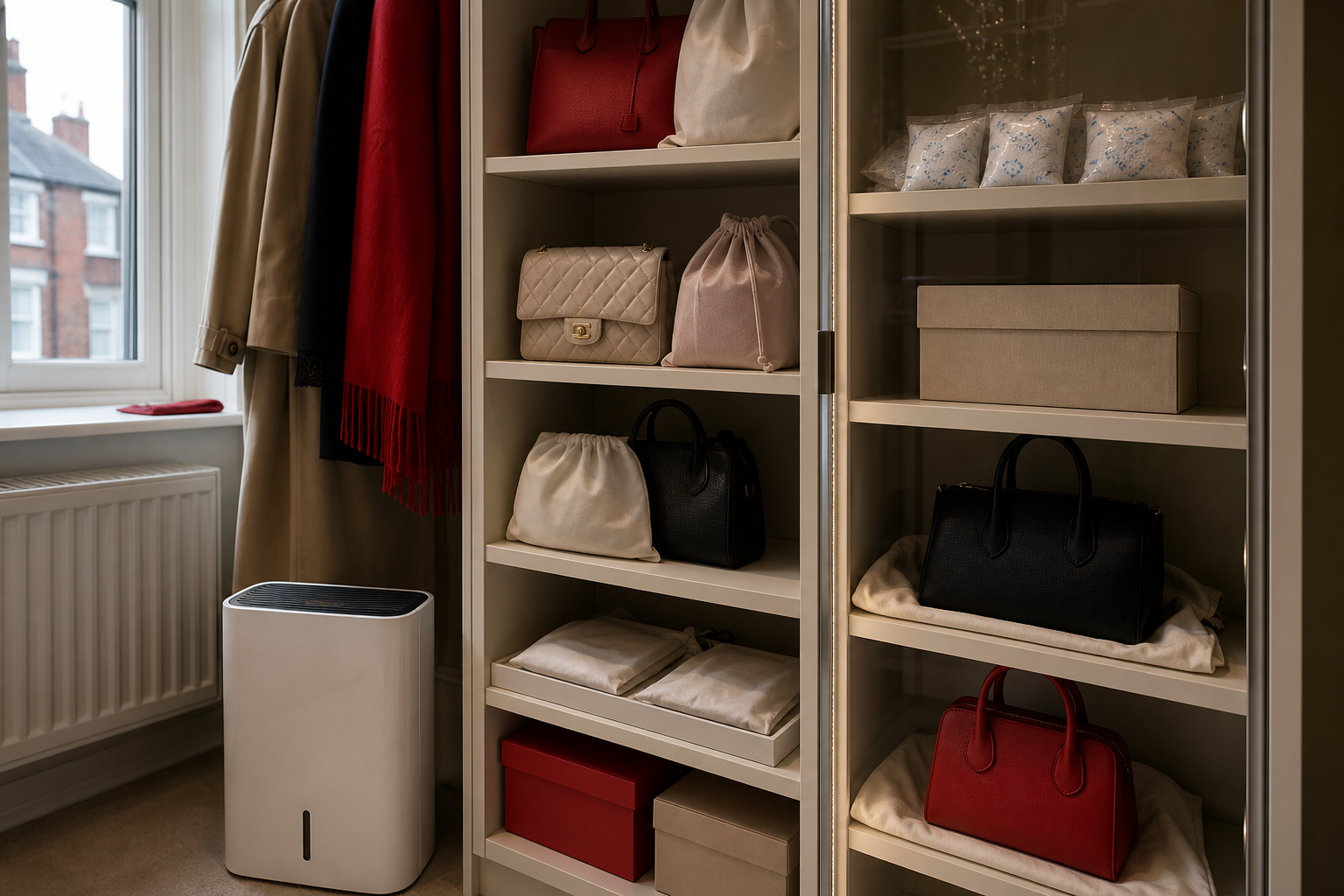
Place a few silica‑gel packets on the shelf (but not touching the bag) to mop up excess moisture. Swap them out when they feel heavier , that’s a sign they’ve absorbed water.
For larger collections, a small dehumidifier keeps the whole closet stable. Aim for a steady environment; frequent temperature swings are the real enemy.
Keep the storage area away from direct sunlight. UV rays fade colour and weaken leather fibres over time.
Maintaining a consistent 30‑40% range reduces the risk of mold on leather goods.
Step 5: Store in a suitable location and maintain regularly
Choose a cool, dry closet or a dedicated wardrobe. Shelves should be sturdy enough to hold the boxes without bowing. Space bags at least two inches apart , that allows air circulation and makes it easy to pull one out without jostling the others.
Rotate your collection every few months. Take a bag out, give it a quick dusting, and check the hardware for any loose screws or tarnish. This habit catches early signs of wear before they become costly repairs.
Keep accessories , straps, charms, and hardware , wrapped in soft tissue and stored inside the bag. That stops them from scratching the surface.
Key Takeaway:Regular inspection plus a stable climate stops most damage before it starts.
For consignors, remember that a bag that arrives in its original dust bag and box commands a higher resale price. Learn more about our authentication process at Sell Designer Clothes & Bags in London.
FAQ
How often should I inspect my stored handbags?
Inspect them every three to four months. The direct answer is to look for dust buildup, humidity spots and hardware loosening. A quick wipe with a dry cloth and a visual check for colour changes catch problems early.
Can I store my bags in a plastic tote?
No, you should avoid airtight plastic containers. The direct answer is that plastic traps moisture, which leads to mold and a musty odour. Breathable fabric bags let the leather breathe while still protecting it from dust.
Do silica‑gel packets need to be replaced?
Yes, replace them when they feel heavy or change colour. The direct answer is that saturated packets no longer absorb moisture, so they lose their effectiveness. Swap them out every three to six months depending on climate.
What’s the best material for stuffing?
Acid‑free tissue paper is the safest choice for most bags. The direct answer is that it won’t yellow over time and won’t transfer chemicals to the interior. For very soft leathers, a padded support pillow offers gentle support without pressure points.
Is it okay to hang my bags on the strap?
Only for short periods. The direct answer is that long‑term hanging can stretch the strap and stress the attachment points. Use a padded hanger and rotate the bags if you must store them vertically.
Do I need a dust bag if I already have a box?
Yes, you should use both. The direct answer is that the dust bag protects against dust and light, while the box shields against knocks and keeps the bag snug. Together they create a low‑cost, museum‑grade micro‑environment.
Ready to give your collection the care it deserves? Follow the steps above and enjoy a wardrobe that stays as fresh as the day you fell in love with each piece.